
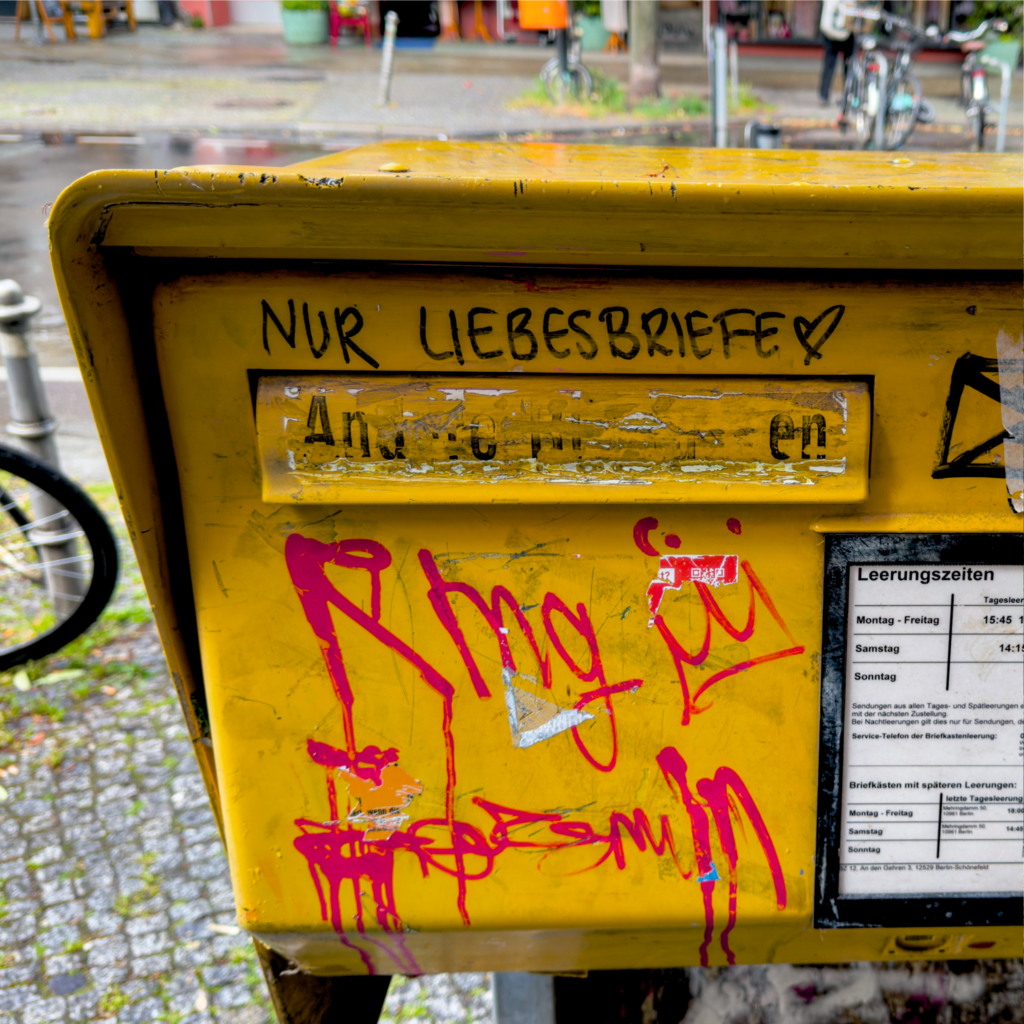
Keeping in touch has never been Bink’s greatest talent. But if you’d like to contact Bink and the typo chaotic poster shop with a genuine question, comment, or suggestion, you’re always welcome to use the contact form below. Every sincere message is appreciated and will be read with care. However, if your message is spam, don’t expect a reply. In fact, there’s a good reason for that, and here’s why.
table of contents
contact Bink here


before you contact Bink, there is a faq page
Before you contact Bink, you might also want to have a look at the FAQ page of the typo chaotic poster shop. The FAQ page stands for ‘Frequently Asked Questions’. Hopefully, this has already answered your question before you even ask it.
the origin of the name spam
Today, the word spam is used all over the world to describe unwanted emails, messages, and other forms of digital junk. But where did the name actually come from?
Surprisingly, the origin of the word has nothing to do with computers. It began with SPAM, a canned meat product introduced by the Hormel Foods Corporation in 1937. The exact meaning of the name has never been officially confirmed, although it is commonly said to stand for “spiced ham.”
The connection between the canned meat and unwanted messages came much later. In 1970, the British comedy group Monty Python performed a famous sketch in which a café serves dishes containing Spam. As customers try to order something else, a group of Vikings repeatedly sings, “Spam, Spam, Spam, Spam,” drowning out every other conversation. The joke is that the word becomes impossible to escape.
During the early days of the internet in the 1980s and 1990s, online users adopted the term spam to describe people who flooded chat rooms and message boards with the same text over and over again. Eventually, the word came to describe the mass distribution of unsolicited emails and, later, unwanted text messages, social media posts, and other digital communications.
Today, spam is one of the biggest challenges on the internet. Email providers use sophisticated filters to block billions of spam messages every day, helping users avoid scams, phishing attempts, and unwanted advertising.
It is remarkable that a simple canned meat product and a comedy sketch gave the digital world one of its most recognizable words. The next time a suspicious email lands in your inbox, you can thank a tin of meat—and a group of singing Vikings—for its name.